After Years of Delays, The Boeing 737 MAX 10 Is Now Certified
After years of delays, technical setbacks, and last-minute hurdles, Boeing's largest 737 MAX has finally been certified.


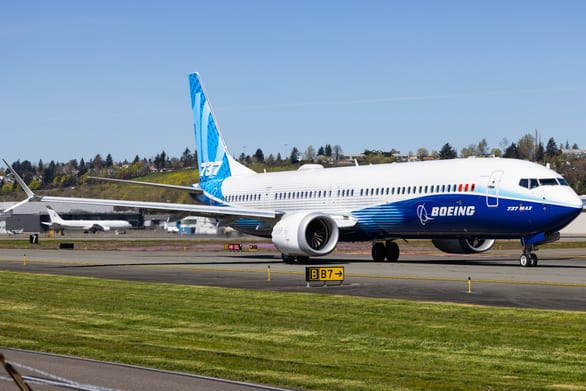
Today is a big day for Boeing. After years of delays, the Federal Aviation Administration has officially certified the 737 MAX 10, clearing the way for Boeing to start delivering the largest member of the 737 MAX family.
This announcement has been a long time coming. First unveiled in 2017, the MAX 10 was originally supposed to enter service in 2020. But a series of technical setbacks, compounded by intense regulatory scrutiny following the MAX's two fatal crashes, turned certification into a years-long ordeal.

According to Boeing, the certification campaign ultimately involved nearly 1,000 test flights, more than 2,000 flight hours, 1,000 hours of ground testing, and tens of thousands of pages of documentation.
Even in the final stretch, there were hiccups. An issue with its LEAP engine's anti-ice system - something that has plagued the MAX family for years - had already complicated the certification process. Then, in late September, the FAA temporarily held up approval after concerns emerged about a software glitch that could disrupt automated flight guidance during certain go-arounds. At the time, it looked like Boeing might be facing yet another painful delay.
Fortunately for Boeing (and its customers), FAA specialists determined the issue did not pose a safety risk. This allowed certification to proceed without demanding an immediate software fix.

Commercially, the MAX 10 is arguably the most important member of Boeing's narrowbody lineup. With room for up to 230 passengers, it's expected to offer the lowest operating costs per seat of any 737 MAX variant.
Take Ryanair, for example. The airline plans to squeeze 228 seats onto its MAX 10s, a whopping 39 more than its existing 737-800s. That's 21% more capacity on every flight, likely for substantially less than a 21% increase in operating costs.
The MAX 10 also finally gives Boeing a proper competitor to the wildly successful Airbus A321NEO. The European-built jet has enjoyed a near decade of flying without a direct Boeing rival, having first entered service back in 2017. And while the MAX 10 can't quite match the A321NEO's range (let alone the longer-range A321XLR's), it offers comparable passenger capacity. This will enable existing 737 operators to enjoy a boost in capacity without having to take on the added complexity of bringing on an unfamiliar aircraft type.
With 1,555 orders from airlines including United, Delta, and Ryanair, the MAX 10 represents more than 30% of Boeing's outstanding 737 MAX order book. That's an enormous amount of business riding on this airplane. Now, the focus shifts to deliveries. Canadian carrier WestJet is expected to become the launch operator, with its first MAX 10 passenger flights targeted for early 2027.
Photos: Alex Crail