The 757-300 Has Found Its Spiritual Successor
The 737 MAX 10 isn't a true 757 replacement, but its stretched fuselage, huge capacity and strong per-seat economics make it feel like the 757-300's spiritual successor.


The Boeing 757-300 is one of the strangest-looking commercial aircraft ever built.
Stretching nearly 180 feet from nose to tail, the airplane is so disproportionately long that, from certain angles, it almost looks like a bad AI render of a normal 757.
But it’s very real — and among aviation enthusiasts, very beloved.
Unfortunately, it’s also becoming increasingly rare. Production of the 757 ended more than two decades ago, and the comparatively small fleet of 757-300s still flying today will inevitably continue shrinking.
There probably won’t ever be another airplane quite like it.
But Boeing may have accidentally created something that feels remarkably similar.
Enter the 737 MAX 10.
No, the MAX 10 Isn’t Really a 757 Replacement
Any comparison between the 737 MAX and the 757 tends to generate an immediate reaction from aviation enthusiasts: the MAX is not a 757 replacement.
And technically, they’re right.
The 757 was designed around a different set of capabilities. Its powerful engines, substantial wing and strong takeoff performance helped make it unusually versatile, particularly on hot-and-high routes, shorter runways and longer missions.
The MAX 10 isn’t trying to replicate all of that.
Instead, Boeing stretched the 737 platform about as far as it could reasonably go in pursuit of a different goal: carrying a lot of passengers as efficiently as possible.
And visually, the result feels awfully familiar.
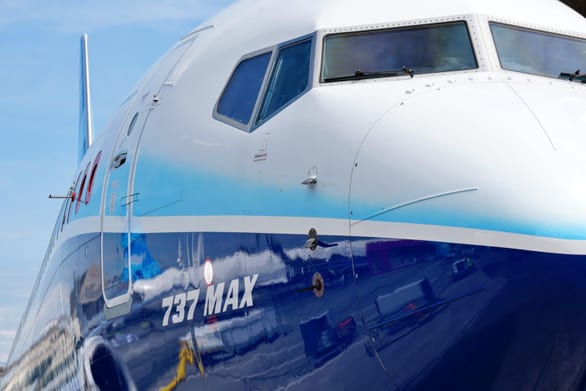
Having seen the MAX 10 in person, the first thing that stands out is just how long the airplane looks. Its narrow fuselage, relatively low stance and compact proportions exaggerate the stretch, giving it the same almost comically elongated appearance that helped make the 757-300 so distinctive.
The MAX 10 measures around 144 feet long. That still leaves it roughly 30 feet shorter than a 757-300, but it is dramatically larger than the earliest versions of the 737.
Compared with the original 737-100, the MAX 10 is more than 50% longer.
That is an extraordinary transformation for an aircraft family whose basic lineage dates back to the 1960s.
Why Airlines Want Such a Long 737
The MAX 10’s unusual proportions aren’t just about squeezing more seats onto an airplane.
They’re about economics.
The MAX 10 is the largest member of the current 737 family, allowing airlines to spread the cost of operating a flight across more passengers.
Fuel, pilots, airport fees and many other operating expenses don’t increase proportionally every time an airline adds another row of seats. As a result, larger variants can often produce lower operating costs on a per-seat basis when airlines can fill them.
That is the MAX 10’s primary appeal.
For airlines operating high-demand domestic and short-to-medium-haul routes, it offers considerably more capacity without requiring them to step up to a widebody aircraft or introduce an entirely different fleet type.
That makes it particularly attractive to carriers that already operate large numbers of 737s.
And if Boeing can deliver the efficiency gains airlines expect, the MAX 10 could offer some of the strongest per-seat economics in the narrowbody market.
Those economics matter to passengers, too. Lower costs per seat give airlines greater flexibility to offer competitive fares while still generating acceptable margins.
The 757-300’s Spiritual Successor
The MAX 10 will never completely replace what made the 757 special.
It doesn’t have the same performance characteristics, nor was it designed to perform the exact same missions.
But that may be the wrong way to think about it.
The 757-300 took an already long narrowbody aircraft and stretched it to an almost ridiculous extreme in the pursuit of additional capacity and better economics.
More than two decades later, Boeing has effectively done the same thing with the 737.
The result is another enormously stretched narrowbody that looks slightly absurd, carries a huge number of passengers and promises airlines extremely attractive economics.
So no, the 737 MAX 10 isn’t the new 757.
But as the last 757-300s gradually disappear from the skies, it might be the closest thing we’re going to get.