Why Lufthansa Kept Flying the A340-600 for So Long
After nearly 23 years of service, Lufthansa is finally retiring its last Airbus A340-600s. The German flag carrier is the last major airline in the world to operate the type, with…


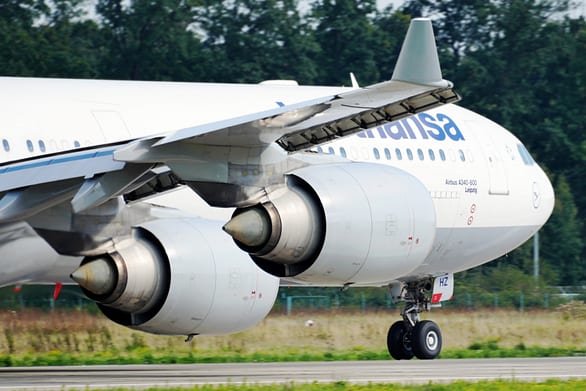
After nearly 23 years of service, Lufthansa is finally retiring its last Airbus A340-600s. The German flag carrier is the last major airline in the world to operate the type, with its final scheduled flight set for October 18, 2026.
For us avgeeks this'll be a sad day, but fact that the plane has lasted this long is a small miracle in of itself. The A340-600 was a flat-out commercial flop, and external factors made the jet practically obsolete by the time it entered service.

Airbus launched the A340-600 in 1997, but by the time it entered service in 2002, increasingly permissive ETOPS rules were allowing more efficient twin-engine jets to fly routes that once favored four engines. And when the Boeing 777-300ER arrived just two years later, it offered similar capacity with far better fuel efficiency (up to 20% by some estimates). The sales figures reflected this reality: Airbus delivered fewer than 100 A340-600s, while Boeing sold more than 800 777-300ERs.
By all accounts, this should've pushed the -600 out of commercial service long ago. And yet, Lufthansa has kept flying the jet, as the platform has some pretty unique characteristics that're tailor made for the airline's needs.
Most of that comes down to its ability to handle premium demand. Germany is the largest economy in the European Union, and as its flag carrier, Lufthansa connects the country's major industrial and financial hubs to the rest of the world. That creates enormous demand for business travel, which helps explain why Lufthansa has continued flying giant aircraft like the Boeing 747 when almost everyone else has retired theirs. These jumbos offer far more cabin space, allowing Lufthansa to dedicate a substantial portion of the aircraft to high-paying premium passengers. And the A340-600 fits largely the same bill.

At more than 75 meters long, it's one of the longest passenger aircraft ever built. That enormous fuselage gives Lufthansa the space to accommodate four distinct cabin classes - First, Business, Premium Economy, and Economy - without sacrificing too much room in any one of them. In fact, Lufthansa's A340-600s feature eight full First Class seats, just as many as its much larger Boeing 747-8s. That's particularly important for Lufthansa, which is one of just a handful of European airlines that still offers a dedicated international First Class product.
By contrast, modern replacements like the Boeing 787-9 and Airbus A350-900 don't offer quite the same flexibility. While they can carry roughly the same number of passengers - and do so with far better economics - their stouter bodies make it harder to accommodate four distinct cabins without making awkward configuration compromises.
But while the plane is an operational match with the carrier, Lufthansa wouldn't have been able to keep flying it without the help of Lufthansa Technik. Its MRO is one of the largest and most capable aircraft maintenance orgs on earth, with decades of experience maintaining the A340 family. That doesn't necessarily make the plane cheap to operate, but it does help ensure that maintaining this notoriously expensive aircraft is at least somewhat manageable.

Of course, the end is finally here. Lufthansa is in the midst of a massive fleet and cabin modernization program, introducing its state-of-the-art Allegris product across more and more aircraft. And while the airline could theoretically retrofit its aging A340-600s with these new cabins, there are simply better tools on the way.
Lufthansa is preparing to introduce the Airbus A350-1000, a significantly longer version of the A350 with enough space for a proper four-class configuration (including First). The airline is also awaiting its Boeing 777-9s, which will offer even more capacity across its long-haul network.
Both jets are far more fuel-efficient than the aging quadjet, and they'll eventually give Lufthansa much of the cabin space and flexibility it's relied on the A340-600 to provide, without the enormous operating costs that come with flying four engines.
Because of that, this stubborn old quadjet has finally reached the end of the line.